Maney Bhanjang, Gateway to Sandakphu | Local Guides • Homestays • Authentic Himalayan Experiences

Sandakphu Phalut Reverse Trek (6 Days/ 5 Nights)

Sandakphu and Beyond official logo

Sandakphu Reverse Trek Package: ₹10500 + GST

Sandakphu and Phalut Reverse Trek

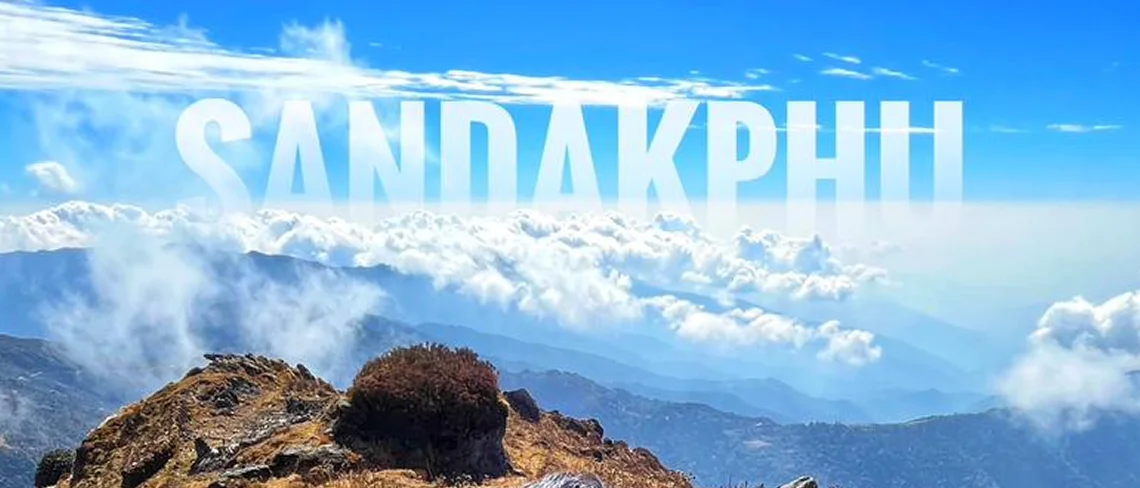
The Sandakphu–Phalut Reverse Trek is a spectacular ridge-line journey across the Singalila Range, offering uninterrupted views of the Sleeping Buddha, the Kanchenjunga massif, and even the towering peaks of the Everest–Lhotse–Makalu group. Unlike the traditional Sandakphu And Phalut Trek route, the reverse itinerary begins from the tranquil riverside village of Srikhola, gradually gaining altitude through forests, meadows, and remote settlements — giving trekkers a smoother acclimatization and a quieter, more immersive Himalayan experience.

Starting from Srikhola (6,200 ft), the trail ascends gently through bamboo and rhododendron forests to the postcard-perfect valley of Gorkhey, where two rivers meet amid pine-covered hills. From here, the trek climbs towards Phalut (11,811 ft) — famous for its 270° panoramic vantage point and some of the clearest views of the Kanchenjunga family. During spring, the entire forest transforms into a colourful corridor of red, pink, and white blooms.

The Sandakphu And Phalut Trek journey continues with a scenic ridge walk from Phalut to Sandakphu (11,900 ft), passing through Sabarkum and Thakum, offering constant Himalayan views on clear days. Sandakphu — the highest point of the Singalila Ridge — rewards trekkers with breathtaking sunrises and sunsets over snow-capped giants. The descent toward Gurdum and Timburey winds through serene forests and quiet homestays before ending once again at Srikhola.

This trek is ideal for beginners, nature lovers, birdwatchers, photographers, and travellers seeking a less crowded, visually rich, and culturally immersive Himalayan adventure.


Sandakphu And Phalut Trek – Key Highlights

You start with Phalut’s wide 270° Himalayan panorama, including the Sleeping Buddha and Everest–Lhotse–Makalu. Better acclimatization: The ascent is more gradual, reducing fatigue and AMS chances. Early and extended walks through beautiful rhododendron, fir, and bamboo forests. Early stay at Gorkhey: Scenic village with a river—one of the trek’s most memorable locations. Less crowd: Reverse direction avoids the usual traffic at viewpoints and trails. Smoother difficulty curve: Trek feels more balanced — moderate → harder → easy. Comfortable finish: Descend gently to Sandakphu and then to Gurdum / Timburey / Srikhola.

  • With Sandakphu and Beyond, every trek is fully customizable to suit your style and pace.

  • Reverse trek fixed Departure dates of every Friday and Saturday- Special rate ₹ 13000 per head.

Sandakphu Phalut Reverse Trek – Detailed Itinerary

Day 1: Arrival at Srikhola

  • Arrive at Srikhola by evening.
  • Acclimatization and night stay at guesthouse/homestay.
  • Enjoy the serene riverside village atmosphere.

Day 2: Srikhola → Gorkhey (7,500 ft)

  • Distance: 16 km
  • Duration: 6–7 hrs
  • Gradual ascent through pine and rhododendron forests.
  • Lunch: Rammam village
  • Overnight: Gorkhey – a beautiful valley at the confluence of two streams.

Day 3: Gorkhey → Phalut (11,811 ft)

  • Distance: 15 km
  • Duration: 7–8 hrs
  • Trek through forests and meadows with lunch at Alubari.
  • Reach Phalut, the second-highest point of the Singalila Ridge.
  • Overnight: Phalut trekkers’ hut.
  • Highlights: Panoramic view of Kanchenjunga and Everest ranges (weather permitting).

Day 4: Phalut → Sandakphu (11,900 ft)

  • Distance: 21 km
  • Duration: 7–8 hrs
  • Long but scenic ridge walk via Sabarkum and Thakum.
  • Lunch: Thakum / Sabarkum.
  • Overnight: Sandakphu.
  • Highlights: Sunset view over the “Sleeping Buddha” range.

Day 5: Sandakphu → Timburey (6560 ft)

  • Distance: ~15 km
  • Duration: ~5–7 hours
  • Lunch: Gurdum
  • Overnight: Timburey
  • Steep but scenic downhill through rhododendron and bamboo forest.
  • Gentle forest trail; well-marked path.

Day 6: Timburey → Srikhola (6400 ft)

  • Distance: 3 kms
  • Final morning walk or jeep ride to Sepi, followed by a 5–6 hour drive back to NJP or Bagdogra
  • Highlight: Trek concludes with mountain memories and a scenic valley exit.
  1. DAY – 1 – Reach Srikhola (6200 ft)
  2. DAY – 2 – Srikhola to Gorkhey (7500 ft)
  3. DAY – 3 – Gorkhey to Phalut (11811 ft)
  4. DAY – 4 – Phalut to Sandakphu (11900 ft)
  5. DAY – 5 – Sandakphu to Timburey (6550 ft)
  6. DAY – 6 – Timburey to Srikhola and return

Sandakphu–Phalut Reverse Trek – Trip Details:

The Sandakphu–Phalut Reverse Trek offers a scenic and well-balanced Himalayan trekking experience through the Singalila Ridge. Walking the route in reverse makes the journey comfortable yet rewarding. Designed as a moderate trek, it combines natural beauty, village stays, and classic Himalayan landscapes into a memorable multi-day adventure.

Q1. What exactly is the Sleeping Buddha at Sandakphu and why does everyone talk about it?

The Sleeping Buddha Sandakphu view is a natural illusion formed by the five peaks of the Kanchenjunga massif — when seen from Sandakphu or the ridge toward Phalut, the arrangement of peaks resembles the silhouette of a reclining Buddha, with a visible head, chest, stomach, and raised knees. It’s not a monument or a viewpoint marker — it’s purely what the mountains look like at the right angle, in the right light. Most people see it clearest at sunrise, when the golden light separates the ridgelines.

Q2. Why does the reverse route give a better experience of the Sandakphu And Phalut Trek than the classic direction?

On the classic route, you reach Phalut after already spending a night at Sandakphu — so the drama of the 270° panorama is slightly diluted. The Sandakphu And Phalut Trek in reverse means Phalut hits you first, fresh, on Day 3, when your energy is highest and your eyes haven’t yet adjusted to the scale of the Himalayas. Sandakphu then becomes the finale — the highest point, the best sunrise, the Sleeping Buddha view — saved for the end.

Q3. Is the Gorkhey village stop worth it or just a transit point?

Gorkhey is genuinely one of the most underrated stops on the entire reverse trek. It’s a small riverside village sitting at the confluence of two streams, still largely off the tourist radar. Most trekkers pass through on the classic route without staying. On the reverse, you overnight here on Day 2 — surrounded by pine forest, with the sound of the river and almost no other trekkers around. Local guides from Sandakphu & Beyond know the best homestay families in the village personally.

Q4. From where exactly can you see the Sleeping Buddha Sandakphu formation clearly?

The clearest views of the Sleeping Buddha Sandakphu formation are from Sandakphu summit itself and from the ridge stretch between Sabarkum and Sandakphu on Day 4 of the reverse trek. Phalut also gives you a powerful Kanchenjunga view but from a slightly different angle — the formation is most recognizable from Sandakphu’s vantage point at around 3,636m. Your guide will point out the exact orientation at sunrise — the face, chest, and knees become visible as the light shifts.

Q5. Is the reverse route actually less crowded than the classic Manebhanjan start?

Yes, noticeably so. The classic direction sees more group departures, especially from large city-based operators, all converging at Tumling and Kalapokhri on the same days. The reverse — starting from Srikhola — is quieter, particularly in the first two days through Gorkhey. By the time you reach Phalut and Sandakphu, you may share the viewpoints with others, but the walk up to them is far more private.

Q6. How difficult is the Phalut to Sandakphu stretch on Day 4 — trekkers on Reddit say it’s brutal?

Day 4 (Phalut to Sandakphu via Sabarkum and Thakum) is 21 km and takes 7–8 hours — it’s the longest day of the entire Sandakphu And Phalut Trek in either direction. The trail itself isn’t technically hard — no steep rock scrambles — but the distance on legs that have already done three days is what gets people. The payoff is that it’s the most scenically continuous stretch of the whole circuit, with Himalayan views nearly the entire way. Sandakphu & Beyond builds adequate rest stops into this day and carries snacks and hot drinks for the trail.

Q7. What is the price of the reverse trek package and what does it include?

The reverse trek package starts at ₹10,500 + GST per person for 6 days/5 nights. This includes accommodation at each stop (Srikhola, Gorkhey, Phalut, Sandakphu, Timburey), all meals from Day 1 dinner to Day 6 breakfast, a certified local guide from Maney Bhanjang, and Singalila National Park entry permits. The group departure rate on fixed Friday–Saturday slots is ₹13,000 per head — which includes additional support logistics.

Q8. What should I pack specifically for the reverse trek that people often forget?

Based on what trekkers commonly regret not bringing: a headlamp with extra batteries (the Phalut trekkers’ hut has limited electricity), a warm liner or sleeping bag (Phalut nights drop sharply even in October), trekking poles specifically for the 21 km Day 4, and blister plasters. Also — book Phalut accommodation in advance. The trekkers’ hut has limited beds and the caretaker sometimes leaves if there are no confirmed bookings, leaving late arrivals in serious trouble in the cold.

Q9. Can the reverse trek be done by beginners or is it only for experienced trekkers?

The Sandakphu–Phalut Reverse Trek is rated moderate and is genuinely beginner-friendly in structure. The altitude gain is gradual in the first two days (Srikhola to Gorkhey, then Gorkhey to Phalut), which helps first-timers acclimatize without the shock of jumping to altitude quickly. Day 4 is long but flat-ish. As long as you’re reasonably fit and comfortable walking 10–15 km a day, this is an excellent first multi-day Himalayan trek.

Q10. What is the best time of year to see the Sleeping Buddha clearly and does season affect the trek experience?

October to December gives the clearest skies and the sharpest Sleeping Buddha Sandakphu views — the post-monsoon air is washed clean and the Kanchenjunga massif stands out in full detail. April–May is the second-best window, with the added spectacle of rhododendrons in full bloom along the Gorkhey and Sabarkum trail. Monsoon months (July–August) bring cloud cover that obscures the peaks and leeches on the lower trails — beautiful forests, but the iconic Himalayan views are largely hidden.

Reverse Trek : ₹ 10,500 + GST

Duration:

6 Days / 5 Nights

Difficulty:

Moderate

Maximum Altitude:

3,636 m (Sandakphu)

Best Seasons:

  • April–May (rhododendrons), October–December (clear views)

SELECT DATE TO REGISTER - 2026

February
6–7 Feb, 2026 Friday and Saturday. AVBL Book Now
13–14 Feb, 2026 Friday and Saturday. AVBL Book Now
20–21 Feb, 2026 Friday and Saturday. AVBL Book Now
27–28 Feb, 2026 Friday and Saturday. AVBL Book Now
6–7 Mar, 2026 Friday and Saturday. AVBL Book Now
13–14 Mar, 2026 Friday and Saturday. AVBL Book Now
20–21 Mar, 2026 Friday and Saturday. AVBL Book Now
27–28 Mar, 2026 Friday and Saturday. AVBL Book Now
3–4 Apr, 2026 Friday and Saturday. AVBL Book Now
10–11 Apr, 2026 Friday and Saturday. AVBL Book Now
17–18 Apr, 2026 Friday and Saturday. AVBL Book Now
24–25 Apr, 2026 Friday and Saturday. AVBL Book Now
1–2 May, 2026 Friday and Saturday. AVBL Book Now
8–9 May, 2026 Friday and Saturday. AVBL Book Now
15–16 May, 2026 Friday and Saturday. AVBL Book Now
22–23 May, 2026 Friday and Saturday. AVBL Book Now
29–30 May, 2026 Friday and Saturday. AVBL Book Now
5–6 Jun, 2026 Friday and Saturday. AVBL Book Now
12–13 Jun, 2026 Friday and Saturday. AVBL Book Now
19–20 Jun, 2026 Friday and Saturday. AVBL Book Now
26–27 Jun, 2026 Friday and Saturday. AVBL Book Now
3–4 Jul, 2026 Friday and Saturday. AVBL Book Now
10–11 Jul, 2026 Friday and Saturday. AVBL Book Now
17–18 Jul, 2026 Friday and Saturday. AVBL Book Now
24–25 Jul, 2026 Friday and Saturday. AVBL Book Now
31 Jul–1 Aug, 2026 Friday and Saturday. AVBL Book Now
7–8 Aug, 2026 Friday and Saturday. AVBL Book Now
14–15 Aug, 2026 Friday and Saturday. AVBL Book Now
21–22 Aug, 2026 Friday and Saturday. AVBL Book Now
28–29 Aug, 2026 Friday and Saturday. AVBL Book Now
4–5 Sep, 2026 Friday and Saturday. AVBL Book Now
11–12 Sep, 2026 Friday and Saturday. AVBL Book Now
18–19 Sep, 2026 Friday and Saturday. AVBL Book Now
25–26 Sep, 2026 Friday and Saturday. AVBL Book Now
2–3 Oct, 2026 Friday and Saturday. AVBL Book Now
9–10 Oct, 2026 Friday and Saturday. AVBL Book Now
16–17 Oct, 2026 Friday and Saturday. AVBL Book Now
23–24 Oct, 2026 Friday and Saturday. AVBL Book Now
30–31 Oct, 2026 Friday and Saturday. AVBL Book Now
6–7 Nov, 2026 Friday and Saturday. AVBL Book Now
13–14 Nov, 2026 Friday and Saturday. AVBL Book Now
20–21 Nov, 2026 Friday and Saturday. AVBL Book Now
27–28 Nov, 2026 Friday and Saturday. AVBL Book Now
4–5 Dec, 2026 Friday and Saturday. AVBL Book Now
11–12 Dec, 2026 Friday and Saturday. AVBL Book Now
18–19 Dec, 2026 Friday and Saturday. AVBL Book Now
25–26 Dec, 2026 Friday and Saturday. AVBL Book Now